

News
CPM Seminar Series - Prof. Ludovic Vallier
21 April 2027
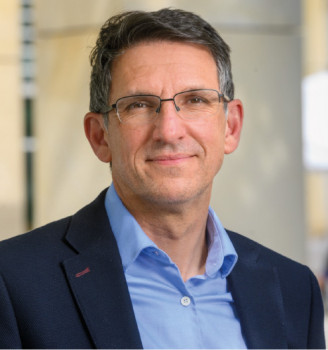
Prof. Ludovic Vallier
From human development to chronic disorders with liver organoids
The liver is a unique organ by the broad spectrum of its function during adult life. The liver processes consumed substances and sustains reserves of iron, vitamins and minerals. It detoxifies alcohol, drugs and other chemicals as well as removing inhaled poisons such as exhaust or smoke all of which accumulate in the bloodstream. The liver has also a function in synthesis by producing bile for digestion of lipids, albumin (Alb) which represents the most abundant protein in the plasma, and blood clotting factors. Finally, the liver has an essential metabolic activity by storing glycogen. Most of these activities are managed by one cell type, the hepatocyte, which constitutes the main cellular unit of the liver.
Diseases targeting liver functions are life threatening and chronic disorders often result in heavy and life-long treatment and can ultimately result in hepatocellular carcinoma, a form of cancer with very poor prognostic. Thus, end stage disease must be dealt with orthoptic liver transplantation (OLT). However, this solution does not represent a cure since it implies high risk of surgical complications, indefinite immunosuppression associated with severe side effects, and eventual rejection. Furthermore, the number of organ donors remains constant the past 10 years while the demand for liver transplantation has more than doubled in the meantime. Thus, only a very limited number of patients can benefit from this therapy.
Our group combine organoids derived from primary tissues and human Pluripotent Stem Cells to study human liver development and liver biology, to model liver diseases in vitro for therapeutic target validations and to develop new cell-based therapy. The presentation will describe the different liver organoids currently available and their applications not only to investigate basic developmental mechanisms but also to establish new therapeutic approaches against diseases affecting the liver.
Short Bio
Ludovic Vallier is Einstein Professor for Stem Cells in Regenerative Therapies at the Berlin Institute of Health (BIH) and Max Planck Fellow at the Max Planck Institute for Molecular Genetics (MPIMG). He received his PhD from Ecole Normale Superieure of Lyon /University Claude Bernard in 2001 where he studied the function of cell cycle regulators in pluripotency. He then joined the group of Prof. Roger Pedersen at the University of Cambridge, where he became Professor of Regenerative Medicine in 2015, and he was co-deputy director of the Wellcome and MRC Cambridge Stem Cell Institute until 2022. His group takes advantage of human pluripotent stem cells and organoids derived from primary tissues to study liver development, liver biology and liver diseases. They combined the resulting knowledge to develop cell-based therapies against acute liver failure and chronic disorders. More precisely, they investigate the molecular mechanisms controlling cell fate decisions during human liver development and exploit the resulting knowledge to understand mechanisms driving disease progression and/or regeneration in the adult organ. The resulting knowledge is then translated into regenerative medicine applications against liver diseases. His talk will explain how in vitro models can be used to study human liver development and how this approach is relevant to understand complex disorders such as fibrosis.
Email: j.gautrot@qmul.ac.uk
Updated by: Elena Moreira