


About Organ-on-a-chip
What is an Organ-on-a-chip?
An organ-on-a-chip as shown in the photo below, is a small device, no bigger than a postage stamp, in which scientists and bioengineers can grow living cells within a laboratory. The aim of the organ-chip is to recreate the physical, chemical and biological environment in which cells live within the human body. By doing this, these minature devices can be used to predict the way the living cells behave when the person has a disease and the safety and efficacy of a new medicine.
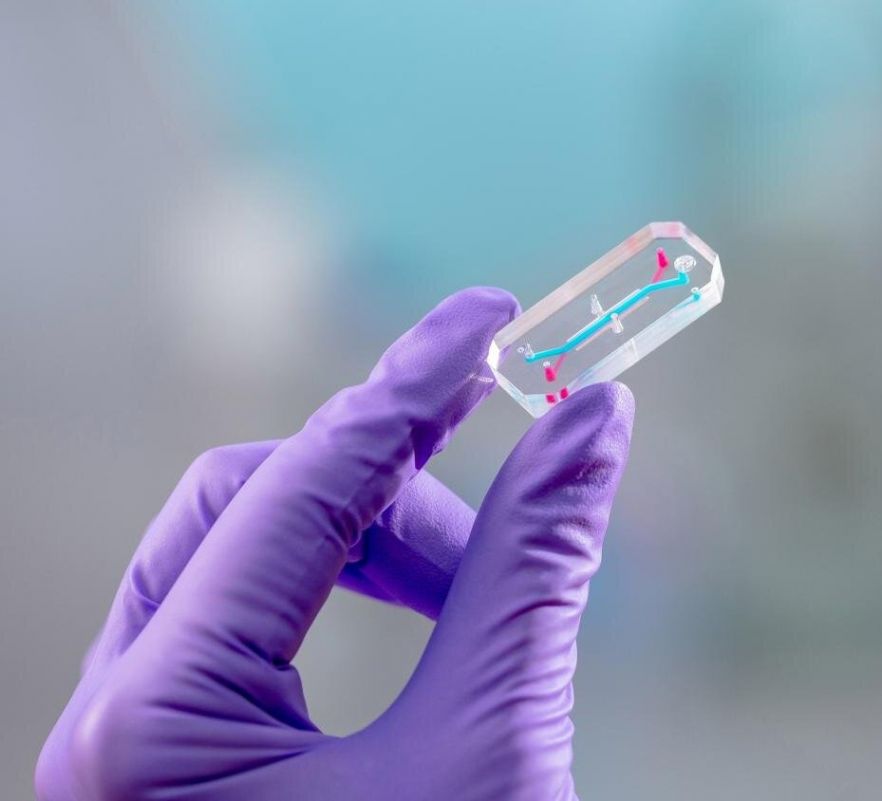
Developing organ-chips requires scientist to work out the appropriate cell types and how to grow them in the chips along with all the other factors that control how those cells behave in the body. Once this has been done and the organ-chips are tested and shown to replicate the way the body works, then they can be used to better understand human disease and to test new medicines.
Why do we use Organ-on-a-chip devices?
We need ways to do research in the lab that helps us understand human disease so we can develop better treatments and test new drugs. Research on animals is not always relevant to human health- sometimes animals respond differently in disease and to treatment, so drugs that work in animals aren't always safe and effective in humans. Organ-on-a-chip devices help us to
- Improve understanding of health and disease by providing better experimental models,
- Provide an alternative to current animal and cell culture models used for testing new medicines,
- Enable us to create patient specific Organ-on-a-chip models to help us develop precise treatments for individuals (precision medicine).
Watch the video below from Cleo Abram to find out more:
Study with us
Biomedical Engineering Undergraduate degrees
Organ-on-a-chip Technologies Master's degree
Centre for Doctoral training in Organ on a Chip Technology PhD programme