


Coronary Artery
Context of Use or Disease: Arterial inflammation, cardiovascular disease, atherosclerosis
DOI: Interdisciplinary Medicine 2026
Platform: Emulate - Chip-S1
Description: Human coronary artery endothelial cells and smooth muscle cells were cultured on appropriate extracellular matrices in the two adjoining channels of the Chip-S1®. Cyclic tensile strain was applied to mimic pulsatile vessel dilation. The chip provided areas of both normal strain (12%) and low strain (4%), the latter replicating areas in the artery which are pre-disposed to inflammation and atherosclerotic plaque formation
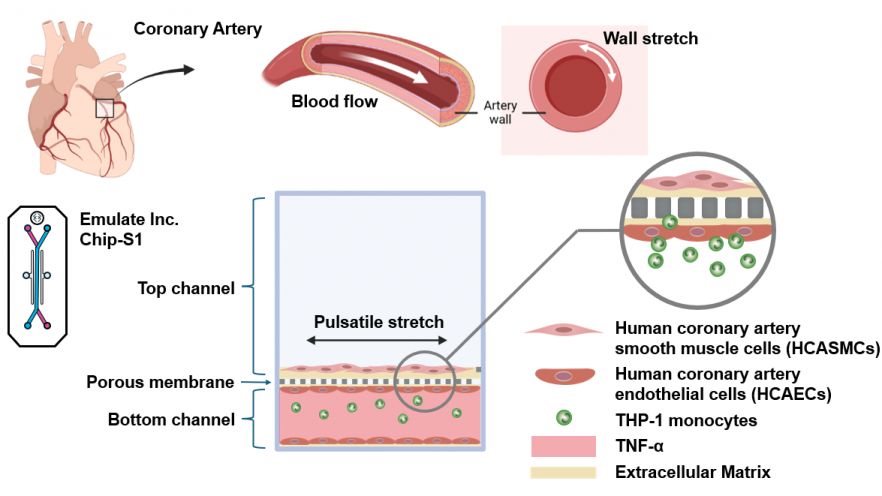
Fig. 1. Graphical abstract for the human coronary artery organ-chip with schematic of chip configuration.
Characterisation & Validation: Both endothelial and smooth muscle cells demonstrated characteristic phenotypic identity, shown by expression of CD31 and α-SMA respectively. Application of physiological pulsatile tensile strain induced alignment of both cell types, perpendicular to strain direction, as seen in vivo. Addition of TNF-α to the vascular channel drove an inflammatory response in both cell types, shown by upregulation of ICAM-1 and P65, and attachment and invasion of circulating THP-1 monocytes. Pulsatile tensile strain reduced the inflammatory response to TNF-α with a greater localized inflammatory response in areas of lower strain, further replicating in vivo behavior.
Ongoing Research: Currently seeking partners for further development/use
Research Team: Martin Knight, Yu Hou
Lead Contact: Martin Knight
Last updated 30/03/2026