


Skin Inflammation
Context of Use or Disease: Immune-cell trafficking in acute skin inflammation, chronic inflammatory skin diseases, skin ageing
Platform: 3D printed microfluidic system
Description: Models are constructed within a custom 3D printed silicone chamber and are compatible with live-cell imaging. Microfluidic channels are fabricated within fibrin gels either by 3D printing with a sacrificial gelatin template or casting gels around a small gauge needle. To form skin equivalents, human dermal fibroblasts are embedded within the fibrin gels, human keratinocytes (N/TERT-1) are cultured on the surface of the gel, and vascular endothelial cells are used to line the microchannel to mimic the vasculature. Immune cells, such as blood derived monocytes, can be perfused through the microchannel and trafficked into the skin model upon activation with inflammatory stimuli.
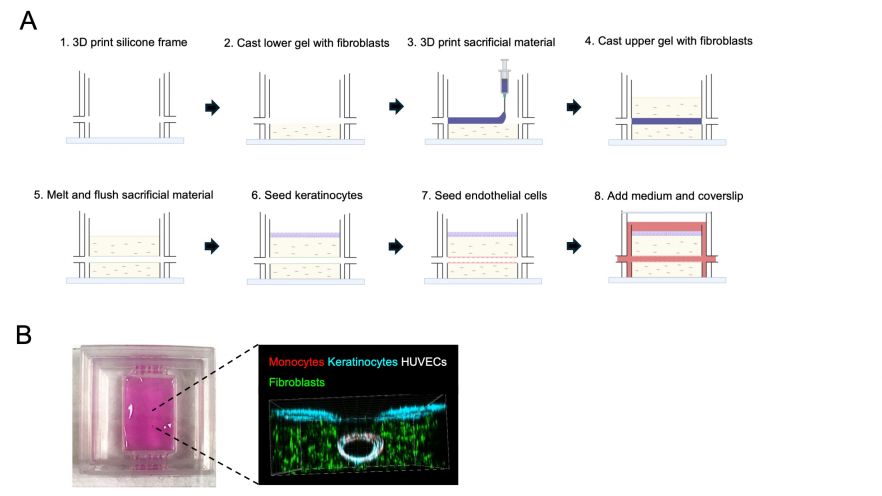
Fig. 1. A. Schematic of fabrication methods. B. Images (photograph and 3D fluorescence) of the microfluidic human skin equivalent (HSE).
Characterisation & Validation: The model accurately replicates monocyte recruitment from the vasculature and into the skin in response to purified bacterial products. Cell phenotypes have been characterised by immunofluorescence staining of key cellular markers and by single-cell transcriptomics, benchmarked against human skin data sets. The model also replicates increased monocyte recruitment in aged skin through the addition of senescent dermal fibroblasts, and atopic dermatitis can be mimicked by the addition of Th2 cytokines, IL-4 and IL-13.
Ongoing Research: Investigation into mechanisms of impaired immunity in aged skin
Research Team: John Connelly, Emma Chambers
Lead Contact: John Connelly
Last updated 30/03/2026