
Student Voices
Our current students are saying:
"The COaCT leadership have been very welcoming and inclusive. It’s clear that a lot of effort, planning, and thought has been put into establishing this CDT"
Induction
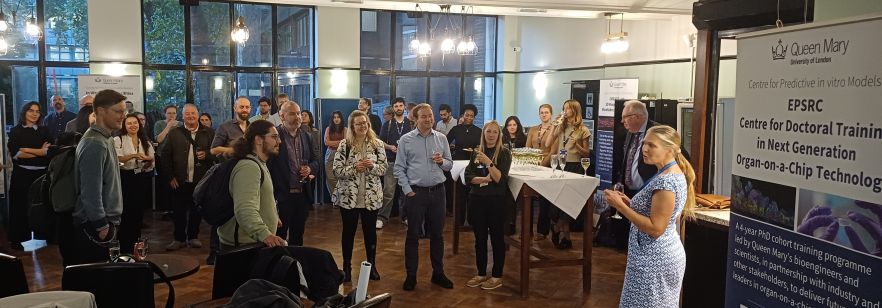
"The COaCT induction week was very well organised, I found it useful that we were given a clearly defined timetable of activities. I most appreciated that we were invited to the UK organ-on-a-chip symposium, as it was not only interesting to hear progress from other passionate researchers in the field, but it also promoted a sense of a larger community in solving biological problems in innovative ways. I enjoyed the presentations by Malcolm Haddrick and Martin Bayliss, and I think it was useful to hear their opinions from an industrial/commercial perspective to Organ-on-a-Chip Technologies"
Introduction to Organ-on-a-Chip Technologies
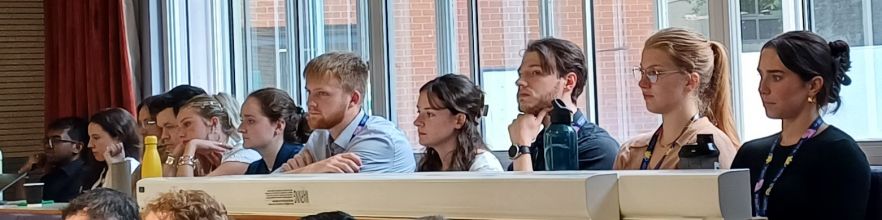
"The best part of the training was learning how to use the commercial chips, and the data analysis sessions. It was a great opportunity to gain confidence in working with these systems in a pressure free, supportive environment "
"I did find it really helpful learning how to use the organ chip platform, how to perform a barrier integrity assay, and what the different applications of my chosen platform were"
"Getting to do the cell culture in the commercial models was very helpful and interesting"
Using the CREATE facility
"The first session we had was a practical introduction to designing chip geometries in Autodesk Fusion which I thought was useful to get everyone on the same page since our cohort has very diverse backgrounds. Afterwards, we had a week of hands-on practice with photolithography, PDMS casting, plasma bonding and optical profiling of finished channel dimensions. Additionally, we were introduced to RegenHu 3D Discovery platform for bioprinting which opens an entirely new avenue for producing organ models.
I think it's great to have a broad overview of fabrication regardless of what chip or model (custom or commercial) that you work with because it makes you really think about the unique advantages and challenges of working at this scale. Being encouraged to think about them early in our projects, before making long-term commitments, probably saving us a lot of pain as well as opening up new opportunities for the future of our projects. Needless to say, the practical skills and an understanding of fabrication will be useful for our career prospects."
"I enjoyed just playing around with CAD, I've never done anything like it before. It was good that we were able to help each other figure it out "
"In the CAD session I enjoyed that I got the opportunity to learn processes which are directly applicable to my project in a supportive environment "
"Well planned - loved the group work- Liisa was great!"
"The best thing about the Create lab was Liisa. Getting to make the chip a—b really helped with understanding. This some of the points went over my head but Liisa was a great guide so I’m sure with the protocol I could repeat. We got to make our own chips! I think that's pretty much what everybody signed up for when they joined COaCT :)"
Winter School
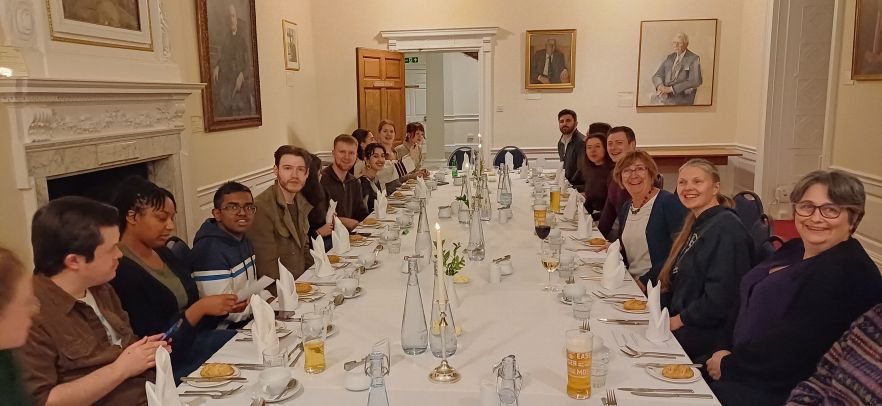
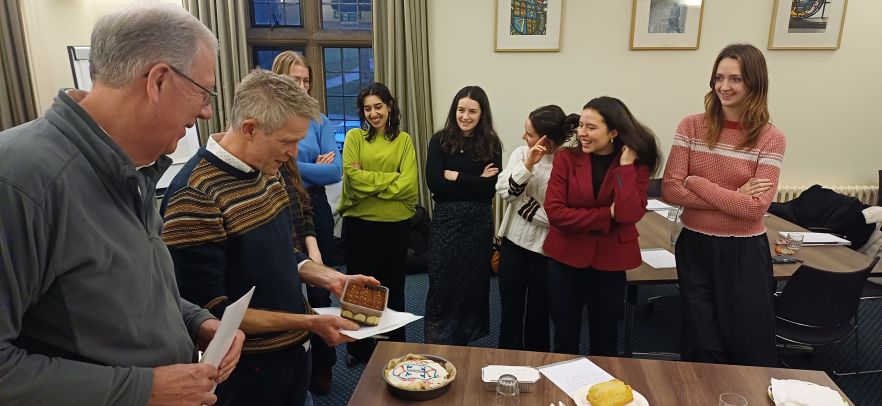
"The winter school was a three day training retreat at Madingley Hall in Cambridge. We did a mix of technical sessions, and alongside our supervisors we also had a session on Responsible Research & Innovation. It was a challenging topic, and a lot of it went over our heads, but having the cohort there to work through the activities together made it much easier to engage with and discuss.
The winter school also gave us a bit of downtime together and it was nice to have the chance for more informal conversations, both with each other and the supervisors. Overall, experiences like the winter school, and being part of a supportive cohort from day one, make the PhD journey much more manageable and enjoyable. The CDT is providing us with a network of peers to discuss ideas with and offer different perspectives."
"Malcolm Haddrick from the Medicines Discovery Catapult delivered a talk on the application of Organ-Chips into different stages of the drug delivery pipeline, and Pelin Candarlioglu from 3D&3Rs delivered a complimentary talk discussing the choice and design of model systems using Organ-Chips to fit different applications. Being taught the industrial perceptions on organ-chip design and application so early in my PhD journey has been really helpful in preventing me from repeating past mistakes and allowing me to focus on the end goal of my research project, to design a platform that would be applicable for industrial application in partnership with the industry partner in my own project."