


Head and Neck Cancer
Context of Use or Disease: Head and neck squamous cell carcinoma (HNSCC) drug screening and chemoresistance profiling
Platform: Spheroid
Description: This model is derived from HNSCC cell lines where cells were seeded onto a 96-well ultra-low attachment plate, forming a 3D spheroid as cells aggregates towards the centre of each well. Cisplatin-resistant strains of these cell lines were first generated in 2D through long-term drug exposure, which was then used to generate the spheroid model alongside their parental, cisplatin-sensitive control. The model is compatible with downstream mechanistic experiments (e.g. RT-qPCR, Western Blot) and other high-throughput applications including RNA sequencing and drug screening.
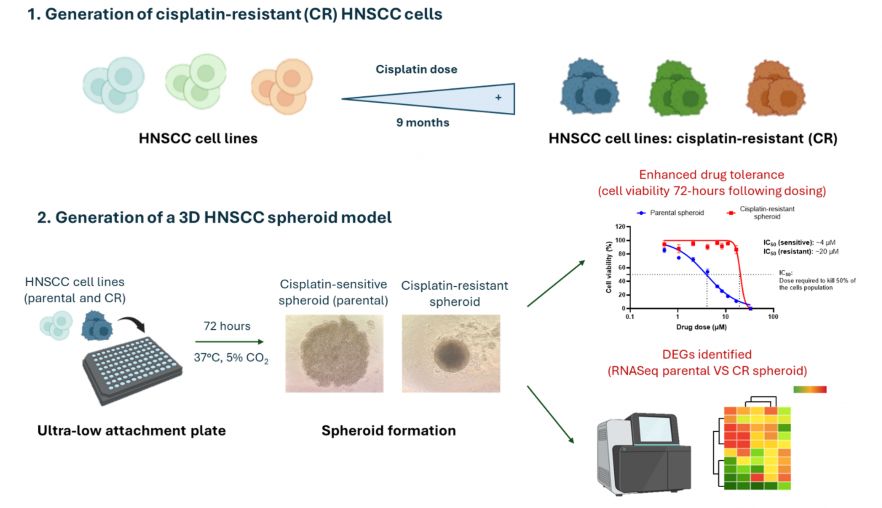
Fig. 1. Schematic showing the generation of cisplatin-resistant HNSCC cell lines and the subsequent 3D cisplatin-resistant spheroid model.
Characterisation & Validation: Successful formation of the spheroid could be observed 72 hours following initial cell seeding. Dose-response experiments demonstrated a 5-fold increase in cisplatin IC50 in the cisplatin-resistant model compared to its parental control, functionally validating the enhanced drug tolerance of this model. Bulk-RNA sequencing results revealed a panel of differentially expressed genes (DEGs) in the cisplatin-resistant model.
Ongoing Research: Mechanistically defining the specific roles of DEGs in driving cisplatin resistance in HNSCC and associated molecular pathways
Research Team: Muy-Teck Teh, Gernot Walko, Hailey Sze
Lead Contact: Muy-Teck Teh
Last updated 27/04/2026